Logo of Delegation of German Industry and Commerce for Eastern Africa

AHK RoundTable: Kenya-German Bilateral Labour Agreement

  • News

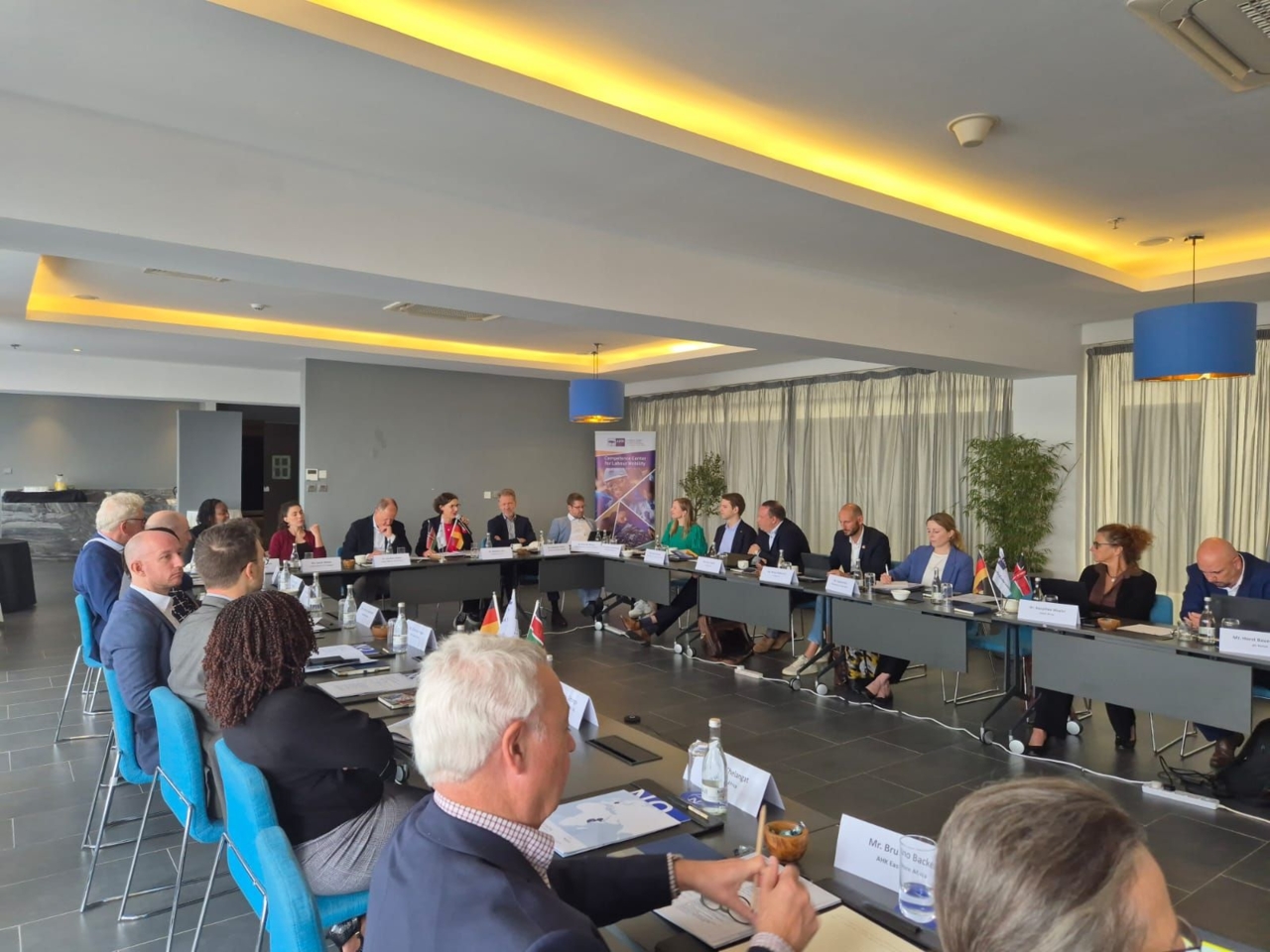
The AHK Eastern Africa - Delegation of German Industry and Commerce for Eastern Africa hosted a roundtable that brought together German representation offices in Kenya, German institutions, and a delegation from German Federal Ministries. The meeting was opened by Dr. Joachim Stamp, Head of Delegation for Migration Agreements, and moderated by Dr. Monika Erath, Delegate of German Industry and Commerce in Eastern Africa. German companies actively contributed by sharing their experiences and challenges in recruiting Kenyan skilled workers for employment opportunities in Germany.

Round Table: Kenya-German Bilateral Labour Agreement

The AHK Eastern Africa - Delegation of German Industry and Commerce for Eastern Africa hosted a roundtable that brought together German representation offices in Kenya, German institutions, and a delegation from German Federal Ministries. The meeting was opened by Dr. Joachim Stamp, Head of Delegation for Migration Agreements, and moderated by Dr. Monika Erath, Delegate of German Industry and Commerce in Eastern Africa. German companies actively contributed by sharing their experiences and challenges in recruiting Kenyan skilled workers for employment opportunities in Germany.


The discussions emphasized the multifaceted nature of labour mobility. Key highlights included the steps taken by the German Embassy to streamline and accelerate visa processing, the establishment of a Mobility Centre by AHK Eastern Africa - Delegation of German Industry and Commerce for Eastern Africa to address labour mobility concerns for both Kenyan and German stakeholders, and the expanded capacity for German language training at the Goethe-Institut Nairobi.


Participants also raised critical challenges such as the shortage of qualified German language teachers and bureaucratic hurdles in visa acquisition, while exploring opportunities for partnerships in training and in facilitating the ethical mobility of Kenya’s skilled workforce to Germany.


The roundtable provided an important platform for strengthening communication channels among stakeholders, reinforcing the shared commitment to advancing labour mobility between Germany and Kenya.


In this context, the African Skills for Germany (AS4G) Project was launched in Kenya on 𝟒 𝐍𝐨𝐯𝐞𝐦𝐛𝐞𝐫 𝟐𝟎𝟐𝟒, shortly after the signing of the Kenyan-German Bilateral Labour Agreement. Supported by the Federal Ministry for Economic Affairs and Energy (BMWE), the project seeks to support Germany in addressing its skilled labour shortage. At its core, AS4G serves as a central hub for labour mobility initiatives, working closely with relevant stakeholders to identify employment opportunities, facilitate ethical recruitment, and 𝐛𝐫𝐢𝐝𝐠𝐞 𝐞𝐜𝐨𝐧𝐨𝐦𝐢𝐜 𝐠𝐚𝐩𝐬 𝐛𝐞𝐭𝐰𝐞𝐞𝐧 𝐆𝐞𝐫𝐦𝐚𝐧𝐲 𝐚𝐧𝐝 𝐊𝐞𝐧𝐲𝐚.

Read the latest news

See all News
  • State of Bavaria East Africa Office in Kenya Business Trip to Tanzania
    News

    State of Bavaria East Africa Office in Kenya Business Trip to Tanzania

    The Business Trip underscored Tanzania’s growing attractiveness for German and international investment, highlighting opportunities across key sectors alongside real-world operational challenges. High-level engagements emphasized the importance of long-term strategy, strong local partnerships, and resilient market entry approaches, reaffirming Tanzania’s role as a strategic destination for sustainable industrial and commercial collaboration.

  • 19 Kenyan Women Entrepreneurs Who Are Shaping the Business World
    News

    19 Kenyan Women Entrepreneurs Who Are Shaping the Business World

    The article showcases Kenyan women entrepreneurs who are reshaping business across Africa through innovation, resilience, and leadership. Their ventures drive economic growth, social impact, and inclusive development despite persistent structural challenges.

  • The Waste Management headache: Stakeholders propose solutions
    News

    The waste management headache: Stakeholders propose solutions

    Kenya’s waste management system is under pressure from rapid urbanization, limited infrastructure, and weak enforcement, leading to environmental and public health risks. Recent reforms, including EPR regulations, present an opportunity to transition toward a circular economy, though clearer implementation and stronger industry–government collaboration are needed.

Searching for something else?

In our information centre, you can find the latest news, downloads, videos, podcasts...

Go to Info Hub